


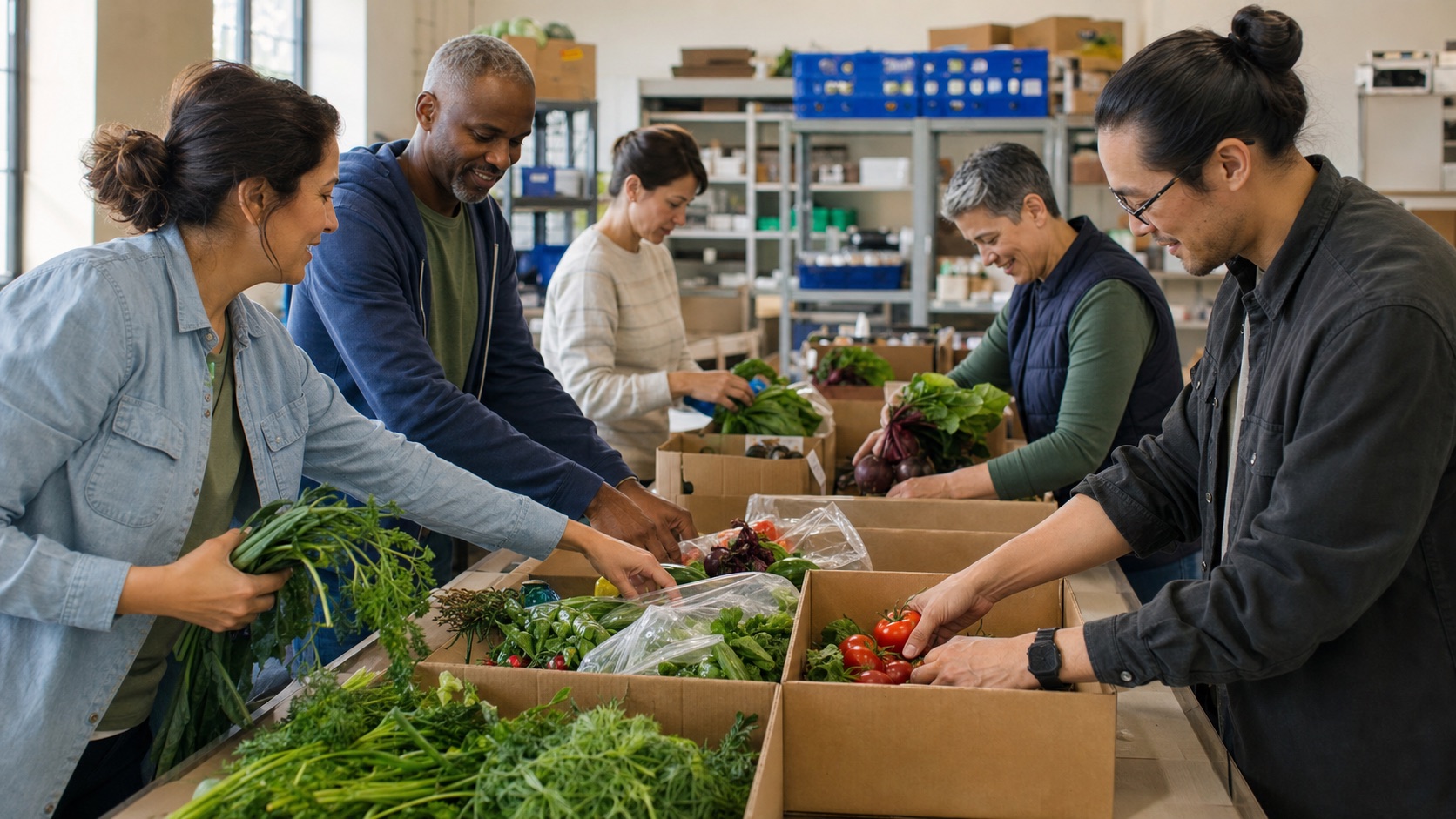
The best activities for making friends as an adult are recurring, participatory, and easy to attend alone. Recurring volunteer teams rank first in this guide, followed by partner-rotation dance classes, cohort-based classes, run or walk clubs, and board game nights. The strongest choice is one you can attend often enough to recognize people, continue conversations, and become part of the routine.
Friendship potential comes from the design of the group: the same people, a shared task, room to talk, and a realistic reason to return.
What are the best activities for making friends?
- Recurring volunteer teams
- Partner-rotation social dance classes
- Cohort-based craft or cooking classes
- Run or walk clubs
- Recurring board game nights
- Language exchanges
- Improv or community theater classes
- Pickleball open play
- Recreational sports leagues
- Climbing groups
- Community gardens
- Hiking groups
- Discussion-based book clubs
- Community choirs or music ensembles
- Recurring group fitness classes
The order is a starting point. A warm, well-run book club that meets every other week can beat a dance class with constant turnover. Judge the actual group as carefully as the activity label.
How did Hey Sammy rank the activities?
Hey Sammy scored the typical version of each activity from 1 to 5 on six factors:
- Recurrence: Does the group meet reliably?
- Participation: Do people do something together?
- Conversation: Does the format create natural chances to talk?
- Solo friendliness: Can a newcomer realistically arrive alone?
- Continuity: Are many of the same people likely to return?
- Access: Can an adult repeat it without unreasonable cost, travel, equipment, or scheduling friction?
| Rank | Activity | Recurrence | Participation | Conversation | Solo friendly | Continuity | Access | Score |
|---|---|---|---|---|---|---|---|---|
| 1 | Recurring volunteer team | 5 | 5 | 4 | 5 | 5 | 4 | 28/30 |
| 2 | Partner-rotation social dance | 5 | 5 | 5 | 5 | 5 | 3 | 28/30 |
| 3 | Cohort-based craft or cooking class | 5 | 5 | 4 | 5 | 5 | 3 | 27/30 |
| 4 | Run or walk club | 5 | 5 | 4 | 5 | 4 | 4 | 27/30 |
| 5 | Recurring board game night | 4 | 5 | 5 | 5 | 4 | 4 | 27/30 |
| 6 | Language exchange | 4 | 5 | 5 | 5 | 3 | 4 | 26/30 |
| 7 | Improv or community theater class | 5 | 5 | 5 | 5 | 5 | 1 | 26/30 |
| 8 | Pickleball open play | 5 | 5 | 4 | 4 | 4 | 4 | 26/30 |
| 9 | Recreational sports league | 5 | 5 | 3 | 4 | 5 | 3 | 25/30 |
| 10 | Climbing group | 4 | 5 | 4 | 4 | 4 | 3 | 24/30 |
| 11 | Community garden | 4 | 5 | 4 | 5 | 4 | 2 | 24/30 |
| 12 | Hiking group | 3 | 5 | 4 | 5 | 3 | 3 | 23/30 |
| 13 | Discussion-based book club | 3 | 4 | 5 | 5 | 3 | 3 | 23/30 |
| 14 | Community choir or music ensemble | 5 | 5 | 2 | 4 | 4 | 2 | 22/30 |
| 15 | Recurring group fitness class | 5 | 5 | 1 | 5 | 3 | 2 | 21/30 |
These scores are Hey Sammy editorial judgments. No published head-to-head trial establishes a universal order for activity types. The framework gives you concrete features to inspect in a local group.
The research supports part of the mechanism behind the framework. In two studies of recent movers and first-year students, Jeffrey Hall found that accumulated time was associated with greater friendship closeness. The recent-mover study relied on retrospective estimates and found that chosen leisure time related differently to closeness than time spent together at work or school. A student sample linked some forms of everyday talk with changes in closeness. His estimates describe those samples and cannot set a deadline for friendship. Read the original friendship-time study.
Small interactions count before closeness develops. Gillian Sandstrom and Elizabeth Dunn found that days with more weak-tie interactions were associated with greater happiness and belonging across student and community samples. The association cannot establish that every conversation will become a friendship. See the original weak-ties research.
1. Why do recurring volunteer teams rank first?
A stable volunteer shift gives people a shared purpose, visible tasks, and repeated chances to work beside one another. Packing food, restoring a trail, helping at an animal shelter, or maintaining a neighborhood resource also supplies immediate conversation material.
Look for a weekly or twice-monthly shift with a regular crew. Large annual service days bring energy, though the roster may disappear afterward. Before signing up, confirm the shift schedule, training requirements, physical demands, and volunteer contact on the organization’s official site.
First-timer line: “I’m new to this shift. What job should I start with?”
The CDC includes volunteering, community involvement, and shared-interest groups among its ideas for building social connection. That guidance supports participation, while the number-one ranking remains Hey Sammy’s analysis of the activity format.
2. Why are partner-rotation dance classes so social?
Beginner salsa, swing, country dance, tango, and similar classes often rotate partners. A solo newcomer can interact with several people without inventing a reason to approach each one. The class meets again, mistakes are expected, and a social dance may follow the lesson.
Choose a series with a beginner track, clear partner-rotation norms, and the same weekly time. Ask if partners are required and if people stay for the social afterward. A welcoming dance community should respect boundaries and make declining a dance easy.
First-timer line: “Is this the beginner line, and do partners rotate?”
Laboratory experiments have found that acting in synchrony can increase cooperation in later group tasks. The experiments tested cooperation in laboratory tasks rather than friendship formation in local dance classes, so treat them as context for shared movement. Read the original synchrony research.
3. Why do cohort-based classes work well?
A six-week pottery, cooking, printmaking, woodworking, or photography course keeps a stable group together long enough for names and small stories to accumulate. Everyone has a visible project, which removes the pressure to create conversation from thin air.
Favor a multi-session course over a one-night workshop. Smaller classes with shared tables and a little setup or cleanup time tend to offer more openings than lecture-heavy formats.
First-timer line: “What made you choose this class?”
4. Are run and walk clubs good for making friends?
Yes, especially when the club has pace groups, a dependable meeting point, and time to gather afterward. Walking groups make side-by-side conversation easy. Running groups work best when nobody is left alone between pace packs.
Check distance, pace, route, bag storage, weather policy, and beginner expectations before you arrive. Pick the same day each week. Familiarity grows faster when you stop appearing as a different stranger at a different session.
First-timer line: “Which pace group is conversational?”
5. Are board game nights good for meeting people?
Recurring board game nights create a task, a table, and a reason to speak. Turn-taking also prevents one confident person from controlling every minute. The strongest nights have a host who teaches games, seats solo arrivals, and maintains a regular calendar.
Avoid relying on a private table that arrives as an established group. Ask the organizer where new players should sit and choose a game whose full session fits your schedule.
First-timer line: “Are any tables starting a beginner-friendly game?”
6. When does a language exchange work?
Language exchanges make conversation the activity. Prompts, timed rotations, and mixed skill levels can help a newcomer participate quickly. The main weakness is continuity: tourist-heavy or drop-in events may have a new roster every time.
Look for a weekly local group with name tags, a clear language split, and hosts who match newcomers. Return to the same table or time slot.
First-timer line: “Which language are you practicing tonight?”
7. Is improv a good activity for friendship?
An improv or community theater class asks a stable cohort to listen, respond, fail visibly, and recover together. That can create unusually strong familiarity. Cost, limited local availability, auditions, and performance expectations lower its overall access score.
Start with a beginner class that welcomes adults with no stage experience. Read the attendance policy because missing sessions can affect the whole group.
First-timer line: “What convinced you to try the beginner class?”
8. Is pickleball open play social?
Open play can be highly social when paddles rotate through short doubles games. Waiting for a court creates conversation time, and new partners provide repeated introductions. The system can feel opaque at first, so confirm skill level, paddle rules, fees, and newcomer hours.
Choose a session with a host or clear rotation system. A busy court with established foursomes offers less access than designated open play.
First-timer line: “How does the paddle queue work here?”
9. Do recreational sports leagues lead to friendship?
A league gives you a stable roster, a schedule, and a shared result to care about. Conversation during play may be brief, but setup, substitutions, practice, and the walk out create time together. The entry barrier is higher when teams require a captain, equipment, or prior skill.
Search for free-agent registration, beginner divisions, or clinics that place solo players. Confirm the season length and attendance expectations.
First-timer line: “Did most people join as free agents or with a team?”
10. Why can climbing groups be social?
Bouldering and top-rope groups create pauses between attempts, visible problems to discuss, and easy requests for advice. A recurring meetup is stronger than visiting the gym at random because the same faces are more likely to return.
Ask about belay certification, rentals, beginner orientation, and the meetup area. Follow gym safety rules and accept technique advice selectively.
First-timer line: “Have you found a good beginner route on this wall?”
11. What makes a community garden promising?
Community gardens combine shared work with a neighborhood-scale roster. Watering, weeding, composting, and work days give people practical reasons to coordinate. Availability, waitlists, seasonal schedules, and plot-based routines can reduce access.
Look for common work days and shared projects. Individual plots with no group time may create proximity without much interaction.
First-timer line: “When do most people come for the shared work?”
12. Are hiking groups good for conversation?
A well-paced hike offers long stretches of side-by-side conversation and a shared destination. Group rosters often change, and transportation, weather, pace, and safety require more planning than a neighborhood activity.
Start with a short, clearly rated route led by an identifiable organizer. Carry the listed essentials, tell someone your plan, and arrange your own reliable transportation.
First-timer line: “Have you hiked with this group before?”
13. Can a book club help adults make friends?
A discussion-based book club provides meaningful prompts and space to hear how people think. Monthly meetings slow down repetition, and popular clubs may have uneven attendance. A smaller group that meets every two weeks can perform much better than its rank.
Read enough to participate, then ask about the next selection before leaving. Library and independent bookstore clubs can reduce cost.
First-timer line: “How long has this group been reading together?”
14. What about a community choir or music ensemble?
Choirs and ensembles bring the same people together for rehearsals and performances. Making something in sync can feel absorbing, but rehearsal time leaves limited room for conversation. Auditions, dues, instruments, and skill requirements may also narrow access.
Choose a non-audition community group when you are starting. Arrive early enough to ask where your section gathers.
First-timer line: “Is there a usual place this section sits before rehearsal?”
15. Can group fitness classes still lead to friendship?
Recurring yoga, cycling, strength, and group fitness classes score well for frequency and solo arrival. Their social weakness is the format: instructions fill the session, then people often leave quickly. The same class can become much stronger when regulars gather before or after.
Pick one time and instructor for six weeks. Say hello before class, learn one name, and avoid interrupting someone during a focused workout.
First-timer line: “Do you usually take this instructor’s class?”
Which activity should you choose?
| Your priority | Start with | Check before committing |
|---|---|---|
| The easiest built-in introductions | Partner-rotation dance, board games, language exchange | Host support and newcomer process |
| A shared purpose | Volunteer team, community garden | Stable shifts and group work |
| Lower-cost repetition | Run or walk club, library book club | Actual cadence and transportation |
| A stable cohort | Multi-week class, improv, rec league | Attendance rules and total cost |
| Conversation while moving | Walk club, hiking, climbing | Pace, safety, and beginner fit |
| Minimal unstructured mingling | Board games, volunteering, classes | A clear task from arrival onward |
Use the six-step plan for making friends as an adult after you choose a group. If you recently moved, the first 30 days in a new city guide helps turn two activities into a weekly rhythm.
What should you ask before attending?
Send the organizer a short message when the listing leaves important details unclear:
“Hi, I’m planning to come alone for the first time. Is this session beginner-friendly, and will someone show me how to join when I arrive?”
Also confirm:
- Exact date, start time, and arrival window
- Registration, waiver, ticket, or membership requirements
- Equipment, clothing, food, or water to bring
- Accessibility and physical demands
- Skill or pace expectations
- The organizer’s name or check-in location
- The next two dates, so recurrence is real rather than implied
Use the event-alone arrival plan and conversation scripts when you are ready to walk in.
How do you turn an activity into actual friendship?
An activity supplies contact. You still need small acts of continuity.
- Visit one: Introduce yourself to the host and one participant.
- Visit two: Greet that person by name and ask one follow-up question.
- Visit three: Stay for ten minutes before or after.
- Visit four or later: Suggest coffee, food, practice, or the next session.
Give a workable group several visits. The familiar-faces guide explains why ordinary recognition matters before a close friendship appears.
Are one-off events useful for making friends?
They can produce a good conversation or introduction, but they lack a built-in next meeting. If you attend one, ask about the organizer’s recurring calendar and exchange a specific follow-up plan with anyone you enjoy talking to.
Passive events such as movies, concerts, and large lectures can be satisfying solo experiences. They usually offer fewer natural conversation openings than a class, team, shift, or game. For friendship, prioritize places where people participate and expect to see one another again.
Start with one place you can return to
Choose one activity that fits your real Tuesday, Saturday, budget, body, and travel radius. Confirm the next session on the official source. Add three dates to your calendar before motivation has to make the decision again.
Find a recurring activity near you with Hey Sammy, choose a solo-friendly plan, and start becoming a regular.
For the larger trend behind these formats, read our response to the News & Observer on why a hobby you repeat can make adult friendship easier.
Sources
- Hall, J. A. (2019). How many hours does it take to make a friend? Journal of Social and Personal Relationships, 36(4), 1278 to 1296.
- Sandstrom, G. M., and Dunn, E. W. (2014). Social interactions and well-being: The surprising power of weak ties. Personality and Social Psychology Bulletin, 40(7), 910 to 922.
- Wiltermuth, S. S., and Heath, C. (2009). Synchrony and cooperation. Psychological Science, 20(1), 1 to 5.
- Centers for Disease Control and Prevention. Improving social connectedness.